


AneeMate milk, honey and soda: check the production requirement first
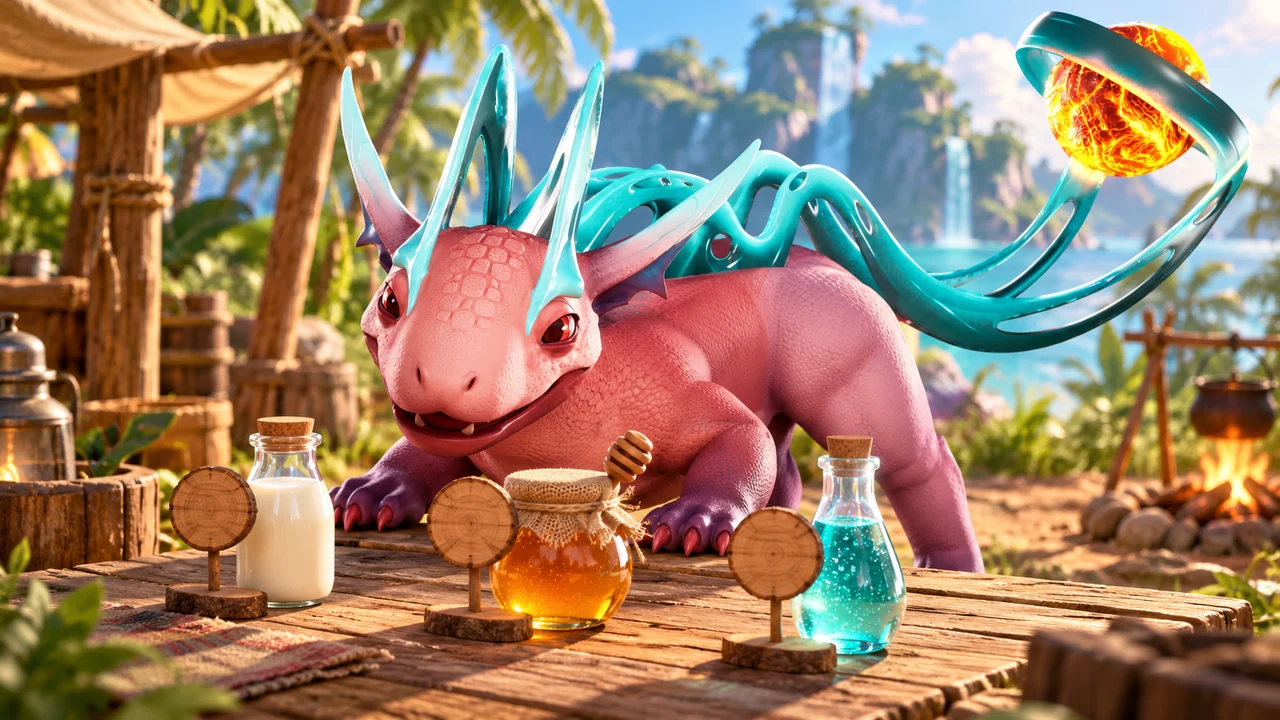
Before planning around milk, honey or soda, check the relevant production structure, player-level requirement and element in your installed build. AneeMate's published guide associates these ingredients with different structures and unlock points. They are not simply three interchangeable crops, so start with the ingredient your next recipe actually needs.
This is a focused preparation guide based on AneeMate's public gameplay documentation, checked on 30 October 2026. The documentation lists milk from a Cow at player level 4 with Water, honey from a Bee house at level 6 with Electric, and soda from a Soda pump at level 9 with Electric. Those are documented requirements, not a claim that we tested their current packaged-game behaviour.
Work backwards from one ingredient
Choose the recipe or task you are trying to complete. Write down the ingredient that blocks it before deciding which structure to pursue. A general desire to build more production can become a distracting shopping list. One missing ingredient gives you a smaller decision: can you produce it yet, and what requirement is actually missing?
Check the recipe information visible in the game rather than assuming a familiar ingredient name behaves like it does in another farming game. This article does not supply an unofficial substitute list or claim that the three ingredients can be exchanged. If a recipe asks for one specific item, treat that wording as the starting point.
Read level and element as separate checks
Reaching a documented player-level threshold is one check. Matching the production arrangement required by the game is another. Do not infer that raising a creature to that number satisfies a player-level gate, or that owning an Electric creature automatically establishes a working production structure. Read the current build's labels and requirements separately.
The farm-worker guide covers ordinary farm assignment and collection context. This article focuses on the decision before pursuing a specific rare ingredient. It does not prescribe harvesting times, guaranteed output, offline production or quantities absent from verified current evidence.
Model example: honey for the next task
Imagine that your next chosen recipe needs honey. This is a planning example, not a report of a tested recipe. Start by checking whether your player meets the documented Bee house threshold. Then inspect the relevant structure requirements in your build, including the element information, before spending materials or rearranging your home.
If you cannot yet meet a requirement, record that as the reason to postpone the recipe. You can choose another objective instead of repeatedly checking an empty basket. The useful distinction is between “this production route is not ready” and “the game has failed to give me an ingredient.” The second conclusion needs evidence that the route was correctly set up and should have produced something.
Once the structure is available, observe one complete production-and-collection cycle using the information shown by the game. Do not extrapolate a day's output from a partial observation or assume the system continues while the game is closed. If you keep notes, include the build and the conditions so the observation remains understandable after an update.
Avoid building the whole chain at once
A small check is easier to interpret than several simultaneous changes. If you add a new structure, move a worker and change the target recipe together, an unexpected result leaves multiple possible causes. Confirm the requirement you are addressing, then make the minimum change that lets you check it.
Keep a brief list of what you have and what is still required. Materials for the structure, the relevant player progress and the ingredient's intended use answer different questions. A missing recipe card is not the same as an unavailable ingredient. The recipe-card guide explains the separate crafting side of that preparation.
What if the expected ingredient does not appear?
First compare the actual structure and ingredient names. Then inspect the requirements and any status the game shows. Record whether the issue is an unavailable structure, an incomplete setup, a collection question or an unexpected result after production. This sequence is a proposed troubleshooting method, not a promise that every problem has a user-side solution.
If the result still disagrees with the current guide, capture the visible requirements and your build information for a report. Do not repeatedly spend resources in an attempt to force the outcome. The home and building guide can help orient the wider system, while a focused report should remain about the one blocked production route.
Common ingredient questions
Is a creature's level the same as the player-level requirement?
Do not assume so. Check which progression value the game names. The published guide gives player-level milestones for these structures; a creature's progression is a separate value.
Does this article promise a fixed production rate?
No. It does not establish harvest duration, output quantity or offline behaviour. Use the current build's information and report actual observations with their conditions.
Should I build all three structures immediately?
Choose according to a concrete recipe or objective and the requirements you can meet. This is a preparation method rather than an efficiency ranking or an economy optimisation claim.
Open the official gameplay guide to check the documented production routes, then compare them with your installed version. Keeping one ingredient, one requirement and one observation together is a practical way to understand what should happen next without treating a website description as a completed game test.