


Aspark, Spivark and Spinamander: Electric progression with a Fire defence
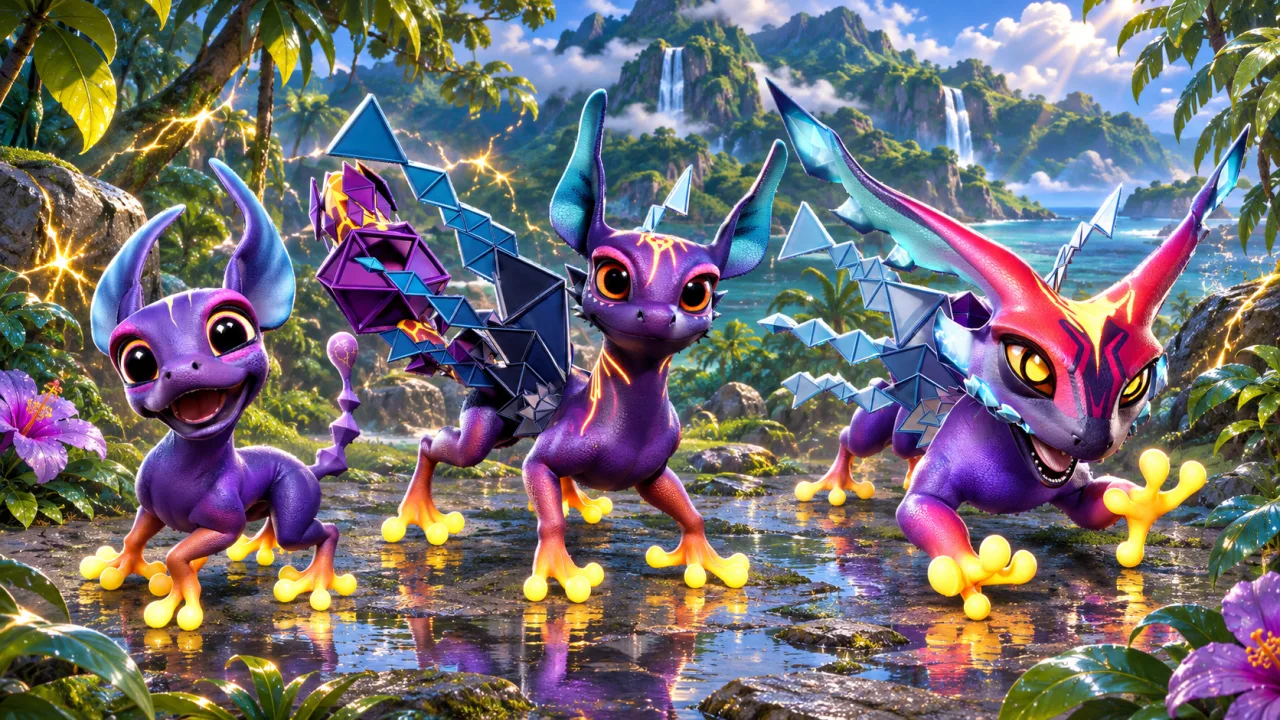
Aspark evolves into Spivark at companion level 25 with one Electric orb, and Spivark evolves into Spinamander at level 60 with three Electric orbs in the current AneeMate web reference. The final form adds Fire to its defensive elements while keeping Electric moves. Plan the two steps separately rather than treating the family as one upgrade.
This guide uses the public species reference checked on 24 November 2026. It is not a new capture or evolution playtest, and a listed habitat does not guarantee an encounter on your next trip.
Two evolution requirements
Aspark is number 049 and Spivark is number 050. Both are Rare Electric creatures. Spinamander is number 051, an Epic Electric and Fire creature and the final form in this family.
The first step requires level 25 and one Electric orb. The second requires level 60 and three Electric orbs. If you intend to take the whole route, keep both requirements in your plan instead of assuming the second step repeats the first.
The levels here belong to the companion evolution entries. Wild encounter bands use player levels and answer a different question. Open Aspark, Spivark and Spinamander to compare the current entries side by side.
Electric moves across the family
Aspark lists Shock Strike at level 1, Bolt Launcher at level 10, Static Field at level 30 and Thunder Storm at level 70. Spivark lists Shock Strike, Lightning Bolt, Static Field and Thunder Wall at those same unlock levels.
Spinamander lists Shock Strike, Lightning Bolt, Static Field and Thunder Chain Ranged, again at levels 1, 10, 30 and 70. All of these listed moves are Electric. The added Fire element does not establish a Fire move in this reference list.
Use the role beside the move name too. The four slots cover melee, shot, area and special roles. A higher form's badge is not a substitute for checking what an unlocked action actually does. Our move-unlock guide offers a useful practice order.
Defence changes at the final form
Aspark and Spivark list Nature and Rock as weaknesses at double damage. They resist Psychic and Water at half damage. Spinamander's listed weakness is Rock at double damage, and its listed resistance is Ice at half damage.
That means the family does not keep the same defensive profile throughout progression. Do not read the added Fire badge as simply appending a second list of weaknesses. The combined element result is what matters.
For an original planning example, compare a route where Nature attacks are a concern with one where Rock attacks are a concern. The reference gives you a reason to distinguish those situations rather than selecting only by rarity. Our element matchup guide explains the wider system.
A small total increase can hide tradeoffs
Aspark's base total is 344: 64 hit points, 67 damage, 68 attack power, 63 toughness and 82 haste. Spivark's total is 355: 55 hit points, 86 damage, 79 attack power, 49 toughness and 86 haste.
The total increases by 11, but base hit points and toughness fall. Damage, attack power and haste rise. Calling the middle form “better in every stat” would therefore misread the reference.
Spinamander's base total is 458: 90 hit points, 103 damage, 98 attack power, 78 toughness and 89 haste. Compare these individual fields at the same reference basis. A card adjusted to another level or fusion state can show different current values. The Base and This level guide explains that distinction.
Read the habitat bands without promising a spawn
All three forms are flagged as found in the wild in the current data. Aspark's reference spans player levels 1 to 50, beginning in Nature bands and continuing into Open-island bands. Spivark lists Open-island bands from 21 to 100, and Spinamander from 41 to 100.
The data also records a rain multiplier of 1.5 for each. That is a relative encounter modifier in the reference, not a 150% capture probability or a promise that one will appear whenever it rains.
Use the current game's information when planning the trip. A habitat entry describes conditions and ranges; it does not identify a guaranteed individual standing at a fixed location.
Prepare the next step, not every future step at once
If you own Aspark, first inspect its current level and the first orb requirement. If you own Spivark, inspect the second requirement directly. A plan copied from the earlier form can underestimate the resources and progression still needed.
Then review the defensive matchups and the moves unlocked now. The level-70 special move is not an immediate tool just because the family reference displays it.
This is a practical reading routine, not a recommendation to rush an evolution. The useful choice depends on the companion and trip you are preparing. The evolution readiness guide provides a broader checklist.
Source and next step
Source: the current public Matebook cards and generated species dataset, checked on 24 November 2026. Requirements and balance can change in later builds. Explore AneeMate gameplay, compare the cards, and follow the installed game's actual requirements when preparing an evolution.