

AneeMate fishing: watch the bite cue before reeling in
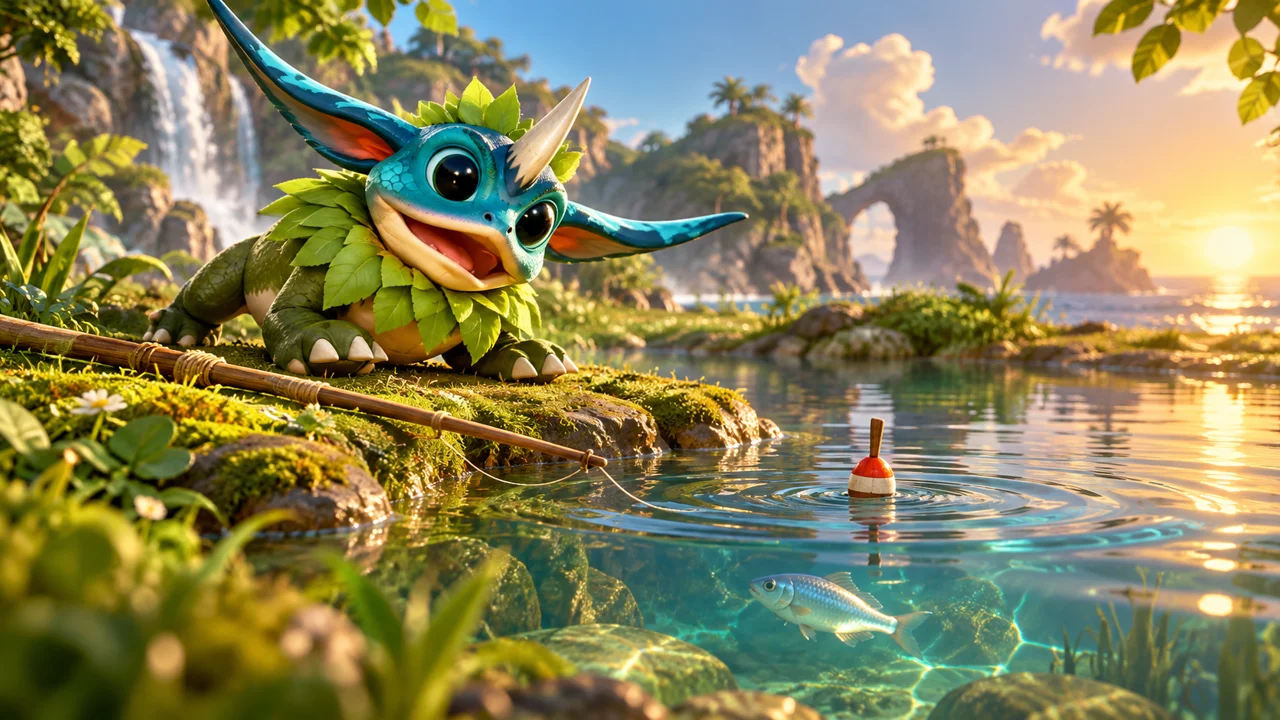
AneeMate's published guide describes a simple fishing sequence: face the water from the shore, cast, then wait for the float to dip and an exclamation mark to appear. Reel in at that cue. Acting too early or too late loses the opportunity, so watching the signal matters more than repeatedly pressing the interaction button.
Fishing also has a surprise built into its description. A haul may bring sea finds or an occasional rare orb, while a wild Water AneeMate can emerge to fight. A quiet stop on the coast is therefore worth approaching as part of an expedition rather than as a guaranteed stream of one resource.
This guide follows the official exploration documentation, checked on 23 October 2026. It has not been independently verified in a packaged game build. Use the current prompts and availability in your installed version.
Follow the cue, not an invented countdown
The public instructions identify a visible bite signal. They do not give a fixed number of seconds to count after every cast. Learning to watch the float and its accompanying indicator is more useful than borrowing a timer from another fishing game.
The documented keyboard sequence uses the interaction key for both casting and reeling. Your own input setup may use another prompt. Keep the sequence separate from the button label: start the cast, wait for the bite, then respond. Pressing the right button at the wrong stage is still a different action from responding to the cue.
If your first attempt fails, ask which part you observed. Did the float dip? Did the exclamation mark appear? Did you react before either happened? Those questions give the next attempt a clear purpose without assuming that a missed catch means a broken system.
Prepare for what might interrupt the quiet
The guide explicitly allows a Water AneeMate encounter from fishing. It does not publish a probability for that encounter in the fishing section. There is no defensible number of casts after which to promise one, and no reason to describe a particular coast as a verified best farming spot without testing it.
A practical preparation is to check your current party and supplies before starting. Our three-creature party guide explains choosing companions around the trip you want. If an encounter begins, the element matchup guide provides context for combat decisions rather than assuming that every creature suits every opponent.
This is preparation for a possibility, not a claim that each fishing attempt turns into a battle. The distinction matters if you are planning a short session around one particular objective.
Give a fishing stop one job
Consider this original, fictional planning example. A player is already heading along the shore to a landmark. They decide to make a brief fishing stop, with the goal of understanding the bite cue. An unsuccessful cast still tells them something if they recognise that they reacted before the indicator.
Another player wants a specific resource. For them, a fishing stop may be less predictable because the guide describes several possible outcomes without guaranteed quantities. They should compare what their current quest or recipe actually requires with the options the game provides, rather than assuming every activity supplies every ingredient efficiently.
Neither example is a tested route or a recommendation to spend a fixed amount of time fishing. They illustrate why naming your objective helps you decide when to continue and when to move on.
Connect the coast with your route home
Before adding another cast, consider the rest of the journey. Are you still exploring toward a destination, or have you changed the session into a fishing trip? Both can be enjoyable. Choosing deliberately is more useful than drifting into a much longer session because the next attempt might be different.
The beacon and map planning guide explains organising a journey around known connections. A coast can be one stop in that plan. It does not need to become the entire outing.
When you describe a find to other players, keep the observation narrow. “This appeared during my fishing stop” is evidence about one event. It does not establish drop rates, weather requirements or an exclusive location.
What makes a useful fishing report?
If the interaction behaves differently from the guide, note the version, platform, input device and visible prompt. Explain whether the problem occurred before casting, while waiting for the cue or when reeling in. A short capture of that sequence can be more informative than a picture taken after it ended.
Avoid including private account information, and distinguish what you saw from what you expected. No gameplay test was run for this article, so its examples should not be cited as proof that a particular build works.
Common questions
How long should I wait after casting?
The guide says to watch for the float dipping and the exclamation mark. It does not provide a universal countdown for every attempt.
Does fishing guarantee a rare orb or creature?
No. The description presents those as possible outcomes and does not establish a guaranteed number of casts.
Can I use a different control layout?
Check the current controls and prompts for your input device. The documented sequence is more important than assuming a keyboard label applies everywhere.
Open the complete gameplay guide, check the exploration section and make your next cast about recognising the cue. One understood interaction is a better starting point than a guessed perfect fishing route.