


Asly, Ciaslei and Ciaruma: Ice moves with Water orb requirements
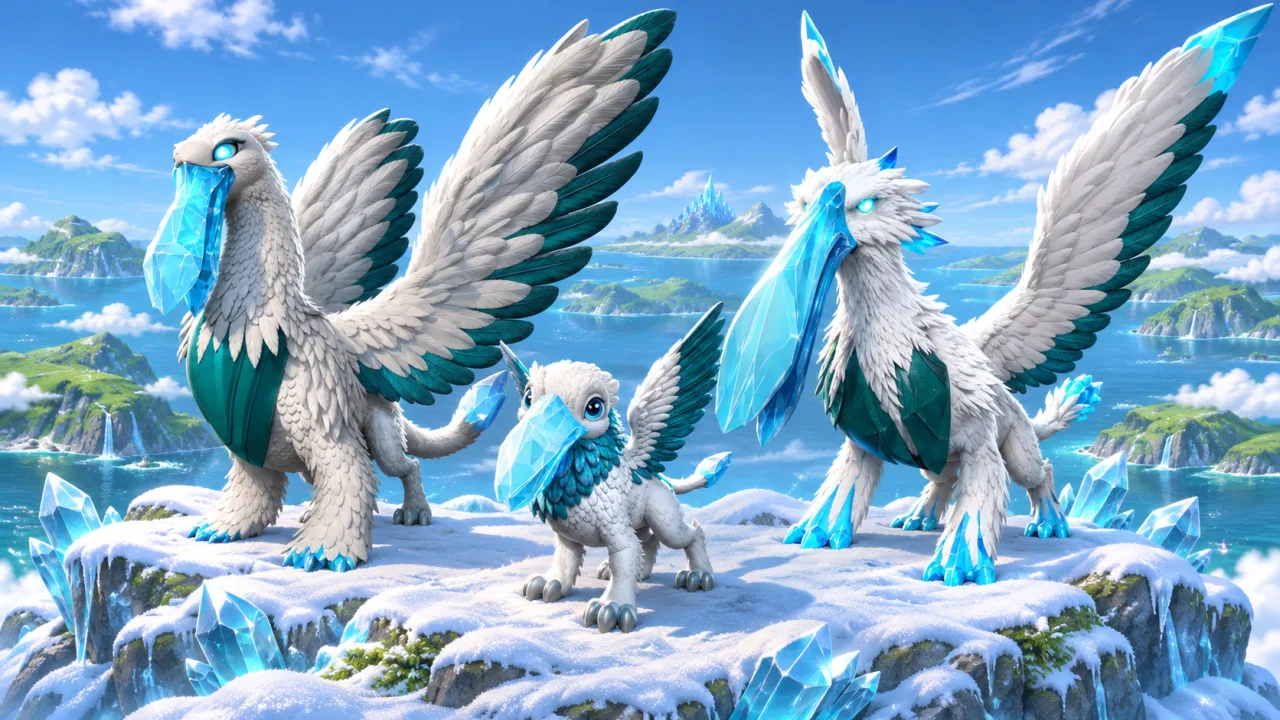
Asly's family uses Ice moves, but its evolution requirements call for Water orbs in the current AneeMate web reference. Asly evolves into Ciaslei at companion level 25 with one Water orb; Ciaslei evolves into Ciaruma at level 60 with three Water orbs. The final form adds Psychic to its defensive elements.
This guide follows the public species reference checked on 25 November 2026. It is a planning reference, not a new report of catching or evolving the family in a gameplay session.
Check the orb rather than guessing from the badge
Asly is a Common Ice creature, Ciaslei is Rare Ice, and Ciaruma is Epic Ice and Psychic. Their defensive element labels do not tell you which evolution material to bring.
The first evolution entry names one Water orb and level 25. The second names three Water orbs and level 60. Keep those requirements separate from the move elements and from player-level habitat information.
Open Asly, Ciaslei and Ciaruma together before preparing an evolution. Our evolution readiness guide explains how to distinguish the companion's level, family step and material requirement.
Read the moves in the current form
Asly's first two listed moves are Frost Bite at level 1 and Ice Lance at level 10. Its area slot unlocks at level 30 and Blizzard Storm at level 70. The current data uses a longer descriptive label for the area entry; follow the actual label in your installed build.
Ciaslei lists Cold Slash, Frost Bomb, Frost Nova and Frozen Wall at levels 1, 10, 30 and 70. Ciaruma lists Freezing Strike, Frost Bomb, an area entry and Blizzard Ranged at those same unlock levels.
All listed moves are Ice. Ciaruma's Psychic defensive element is not evidence that its listed attacks become Psychic. The move-unlock guide offers a useful way to practise the actions available now rather than planning around a locked special move.
The final defensive profile changes
Asly and Ciaslei list Fire and Rock as weaknesses at double damage. Both resist Nature and Psychic at half damage. Ciaruma's listed weakness is Electric at double damage, while Nature and Psychic remain listed as half-damage resistances.
That gives you a meaningful reason to compare the final form's matchups. Do not simply carry the earlier form's weakness list forward because all three creatures still use Ice moves.
For an original planning example, imagine choosing a companion for a trip where Fire attacks are expected. Compare the current combined-element reference before making the choice. This is an illustration of reading the card, not a guaranteed strategy for a particular encounter.
Compare individual base stats
Asly's base total is 308: 66 hit points, 54 damage, 57 attack power, 83 toughness and 48 haste. Ciaslei's total is 348: 65 hit points, 78 damage, 75 attack power, 73 toughness and 57 haste.
The middle form has a higher total, but its base hit points fall by one and its toughness falls by ten. Damage, attack power and haste increase. A larger total therefore does not establish that every field improves.
Ciaruma's base total is 469: 105 hit points, 94 damage, 94 attack power, 117 toughness and 59 haste. Use the same reference basis when comparing. A card set to another level or fusion state can display different current values. The base-stat reading guide explains that distinction.
A family plan can have two stages
If you own Asly, prepare the first requirement before treating Ciaruma as the immediate next step. If you already own Ciaslei, inspect its own level-60 requirement directly rather than reusing the earlier form's checklist.
Then compare the unlocked moves and defensive profile relevant to the trip. Evolution planning is not only a question of whether the material is in the bag. It is also a question of what you expect to use after the change.
This is a practical reading routine. It does not require a wallet or a token transaction, and it does not claim that rushing progression is always the best choice.
Habitat information is a separate reference
The current data flags all three forms as found in the wild. That does not make their habitat bands interchangeable or guarantee that a particular individual will be present on the next visit.
Inspect the specific form's card and use the installed game's current information. Do not infer a precise spawn location from a family link, a concept illustration or the fact that another member has a wild entry.
The element guide can help with broader matchup questions. It does not replace the individual creature's acquisition and progression requirements.
Source and next step
Source: the public Matebook cards and the current generated species dataset, checked on 25 November 2026. Balance and requirements can change in later builds. Compare the three cards, then follow the game's actual evolution prompt when the companion and materials are ready.