


Quiboon to Nashroon: Electric moves, a new Nature defence
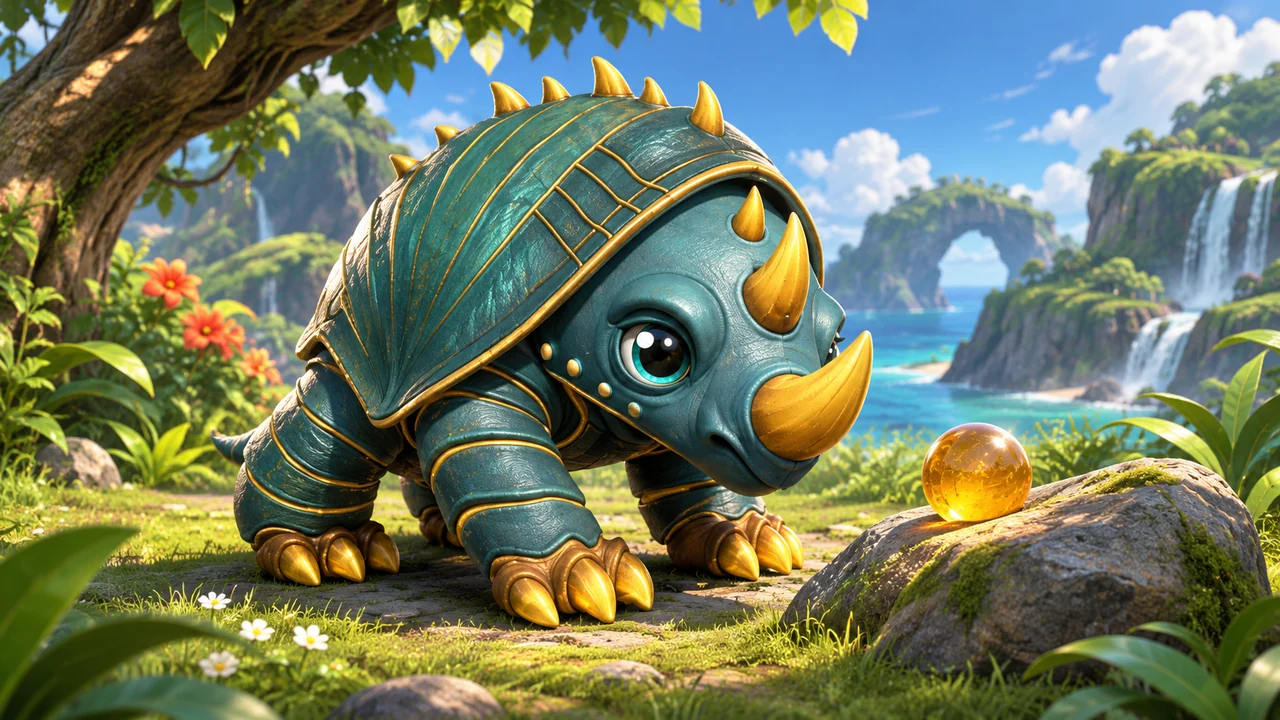
Quiboon's published AneeMate reference lists an evolution into Nashroon at companion level 25 with one Electric Orb. The family changes from Electric to Electric and Nature, which changes its defensive matchups as well as its appearance. Use this as a Matebook reference guide, without reading the entry as a guaranteed wild encounter or acquisition route.
Start with what the current entry actually says
The official Quiboon card identifies a Common, first-stage Electric AneeMate. Its family has two stages, ending in Nashroon. The website's current data marks both entries as not found in the wild. That last detail matters: a species page can document a creature even when it is not an instruction to search a particular forest or wait for a particular weather condition.
We checked the current website data and the live Quiboon card on 8 November 2026. This guide does not claim that we caught, evolved or tested either form in a session. Where the website provides reference values, keep them attached to that source. If you are comparing an owned creature, its actual in-game information is the place to confirm its present state.
Evolution asks for a level and an orb
Quiboon's listed next step requires companion level 25 and one Electric Orb. These are two requirements, rather than two alternative ways to evolve. Before planning the change, check the family and both parts of the requirement. Do not assume that reaching the level supplies the orb automatically.
Our evolution readiness guide covers that preparation more broadly. For this family, keep the Electric Orb's type in view. An orb with a different element is not interchangeable just because it occupies a similar-looking inventory slot. This is a reference-reading point, not a claim about a new automatic inventory feature.
Nature changes the defensive comparison
Quiboon's reference lists doubled incoming damage from Nature and Rock, with half damage from Psychic and Water. Nashroon's Electric and Nature combination changes that picture: the listed weaknesses are Fire, Ice and Rock, while Electric and Psychic are halved and Water is quartered.
This is not a simple “all resistances improve” progression. Rock remains a weakness. Some relationships change, and new weaknesses appear. A useful family comparison asks what encounters you want the creature to help with, rather than declaring the later stage universally safer because it has evolved.
The element matchup guide explains the broader combination system. Keep incoming damage separate from move element. A defensive pairing does not mean that every move gains a second element, or that every encounter becomes favourable. The current family data should settle the specific question you are asking.
Read move names and unlocks together
Quiboon's listed moves are Shock Strike at level 1, Bolt Launcher at 10, Static Field at 30 and Thunder Storm at 70. Nashroon retains Shock Strike and Static Field, while its projectile is Lightning Bolt and its later special is Thunder Chain Ranged. The listed unlock levels remain 1, 10, 30 and 70 across those slots.
That creates a practical planning distinction. Evolution readiness at 25 does not mean that a move listed for 70 is ready at the same time. Likewise, a new name is not proof that the move follows another Electric attack's mechanics. Read the current move information before inferring its behaviour from the word “chain.”
The separate Wet and electric chain guide discusses a published mechanic for the kid's hit. It is not a description of Nashroon's special move. Keeping that boundary prevents a reference guide from quietly inventing an ability specification.
An original planning example
Imagine you are preparing a party and comparing these two reference entries. Write down the encounter's relevant incoming element, the creature form you are considering and the move you can actually use at its present level. This is an editorial exercise, not a recommended competitive team or a performed combat test.
If the incoming element is Rock, both entries still show a weakness. That is a reason to think about the rest of the party and the encounter, rather than assuming evolution alone removes the concern. If you are evaluating Water defence, the reference shows a different relationship between the forms. Neither observation supplies a complete damage calculation.
Avoid mixing the website's base values with a live creature's current health or a family's maximum reference. Our stat-label guide separates those views. A clear comparison uses the same kind of value on both sides and says when a value comes from the website rather than the game session.
Frequently asked questions
Where can I catch Quiboon in the wild?
The current website entry says it is not found in the wild. This guide therefore gives no invented spawn location, time of day or capture route. Check current in-game availability and official updates for changes.
Does Nashroon lose its Electric identity?
The published entry lists Electric and Nature as its elements and Electric moves in the named slots. The added defensive element should not be read as a wholesale replacement of the move list.
Is the later form always better for my next encounter?
This guide does not establish a universal ranking. Compare the relevant matchup, available moves and actual creature state. Evolution requirements and reference values are preparation tools, not a guarantee of the encounter's outcome.
Open the Matebook to compare the family, then explore AneeMate on Epic. Bring a question about the creature you have, rather than a promise based on an unseen catch.
Sources: current official Quiboon, Nashroon and Matebook species data, checked 8 November 2026. Website reference facts are distinguished from live account values and unperformed gameplay tests.